How to measure lactate: test protocol, numbers and mistakes
Why measure it yourself
A lab test gives you an exact curve twice a year. A device in your pocket gives you the same curve on your own track, in your own weather, in your own shoes — as often as you need it. The difference is not accuracy but frequency: training changes from week to week, and a number taken today answers the question "which zone am I running in now", not "which zone was I in back in March".
What lactate actually shows, and why heart rate answers that question worse, is covered in why athletes measure lactate. This article is about the procedure.
What you need
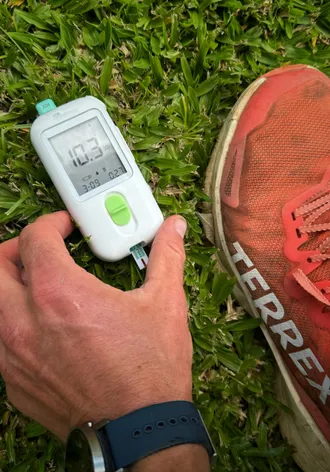
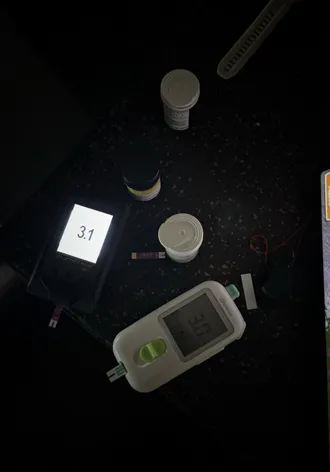
- a portable lactate analyzer — a result from one drop of blood in 10–15 seconds
- test strips, one per measurement: a step test uses 6–8 of them
- lancets and alcohol wipes
- a dry cloth or paper towel to wipe the finger before every drop
- a stopwatch and any table to write down pace, heart rate and lactate
Strips are sensitive to temperature and moisture. In winter keep them and the device under your jacket: a pack left in the cold for an hour reads low.
The step test protocol
The test builds an intensity-to-lactate curve that shows where the body switches from one regime to another.
- warm up for 15 minutes easy, then take a resting sample — this is your baseline, usually 0.8–1.8 mmol/L
- each stage lasts 4 minutes (3 is acceptable on the bike) at a constant pace
- step size: 0.5 km/h or 20 seconds per kilometre when running, 20–30 W on the bike
- take blood within the first 20–30 seconds after the stage, no later: blood lactate keeps moving, and a sample taken two minutes into recovery belongs to a different point
- keep the sampling break to 30–60 seconds, otherwise the next stage starts on a cooled-down body
- stop when lactate rises by more than 1 mmol/L in a single stage, or when you can no longer hold the next stage for four minutes
Write down every stage on the spot: pace, heart rate in the final minute, lactate. Five stages is the minimum for a readable curve; seven or eight make the answer more confident.
Reading your own curve
Put the stages on the horizontal axis and lactate on the vertical one. The curve stays almost flat, then bends upward — and it bends twice.
The first bend is LT1, the aerobic threshold. Lactate rises above baseline for the first time and stays there, usually around 2 mmol/L. Below it lie your long easy volumes.
The second bend is LT2, also called the anaerobic or lactate threshold. Beyond it lactate grows non-linearly and never levels off again. The common reference is 4 mmol/L — and it is a reference, nothing more: one athlete's threshold falls at 3.2, another's at 5.5, and both are normal. Look for the bend in your own curve, not for the point where it crosses the "4" line.
Hence the practical value: your pace at LT2 is the pace you can hold for roughly 40–60 minutes, and it is the border between endurance work and running into debt. What to do with the thresholds once you have them is covered in the lactate threshold explained.
Single measurements during a session
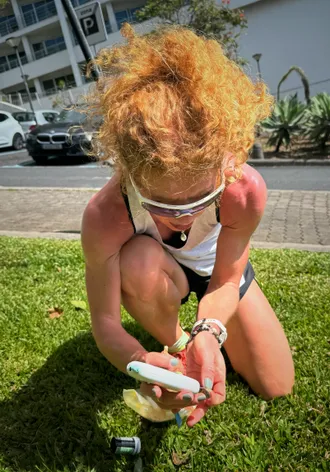
Besides the full test there is a more frequent job: checking that you are in the intended zone. One or two samples in the middle of an interval session tell you directly whether you hit the target or are simply running faster than planned. It costs two strips and happens inside the session.
Such a sample is not a threshold: it was taken under different conditions. It only answers the question "is this effort the one I planned".
What usually ruins the result
- a damp or sweaty finger: sweat dilutes the drop and the number comes out low. Wipe dry before every sample
- the first drop carries interstitial fluid — wipe it away and use the second one
- squeezing the finger to force a drop: squeezed blood reads differently from blood that flows freely
- a strip from an open pack that has been sitting in the sun or in the cold
- inconsistent timing after meals: carbohydrates before the test raise the whole curve
- testing on the back of a hard session the day before: tired muscles hold little glycogen, lactate will be lower at the same pace, and the threshold will look higher than it is
That last one is the most common reason for "strange" results that come out better or worse than last time for no visible reason. It is unpacked in same intensity, different lactate.
How often to repeat it
Every 6–8 weeks, on the boundary between training blocks. More often makes little sense: thresholds do not move that fast, and the spread between measurements will swallow the difference.
Conditions have to match: same time of day, same breakfast, same surface, same stage protocol. A test is only comparable to itself; a curve taken with a different protocol is not comparable at all.
How to handle a specific device and its strips is covered in the analyzer usage guide.